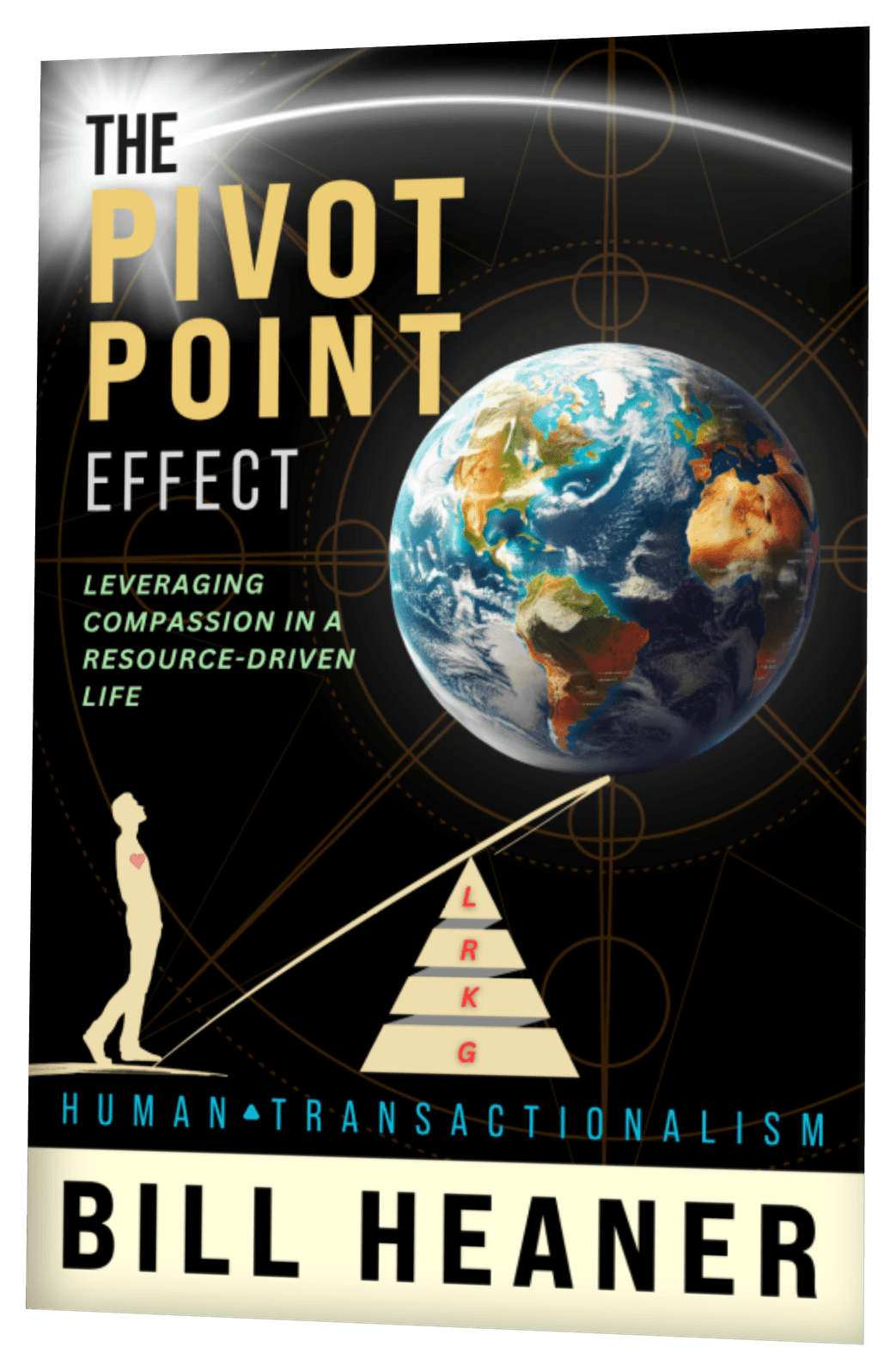
The Book
The Pivot Point Effect
Leveraging Compassion in a Resource-Driven Life
What if a more meaningful life isn't about finding more—but seeing more clearly what you already have, what you need, and what you have to give?
This book is an invitation to look at your life not in terms of what's missing, but in terms of what's already moving through it — and what becomes possible once you can see it clearly.
In The Pivot Point Effect, Bill Heaner explores the hidden exchanges that shape our lives—how our needs, resources, choices, and relationships continually influence one another.
At the heart of the book is the Pivot Point Process, a practical four-step framework for identifying what matters most, understanding why it matters, recognizing the unique resources you bring to the world, and turning those insights into meaningful action.
The book then expands that personal framework through Human Transactionalism—a way of understanding how resources move between people, how our needs connect us, and how compassion can transform ordinary human transactions into opportunities for mutual value.
The result is more than a philosophy. It is a practical way to understand your life, your relationships, and the difference you are uniquely positioned to make.
Buy the Book
Purchase links are coming soon. Until then, you can begin the Pivot Point Process directly on this site, free.
Four steps. One clearer direction.
The Pivot Point Process begins with four deceptively simple questions:
1. What matters most?
Your Primary Pivot Point
2. Why does it matter?
Your Three Reasons
3. What do you have to work with?
Your Gifts and Talents
4. What will you do with it?
Your Living Life List
The book guides you through each step, then widens the lens—showing how the same principles operate in relationships, groups, communities, daily life, and work.
You can explore the complete framework in The Pivot Point Effect or begin building your own Pivot Point Process here as you read.
See the Process overview →"Bill Heaner's insights into leveraging compassion for personal and societal transformation are both timely and timeless."